
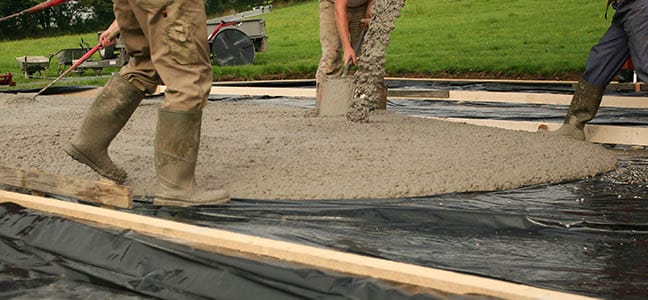
In any construction or home improvement project, you need a concrete mix with the correct proportions of water, cement, aggregates, etc. Only then does the poured concrete behave and perform as required. However, if the concrete mix ratio is incorrect, it can lead to issues ranging from poor finishing to structural problems. This is the reason you should order concrete mix delivery after getting the requirements from the structural engineer and then relay them to the supplier. Below are some signs of a poor concrete mix.
Signs Of A Bad Concrete Mix
Excessive Slump
Excessive slump means the concrete is too flowy and wet than required. This makes the workability of concrete too high to suit any purpose and can render the entire concrete batch useless.
To explain it further, slump is a measurement of concrete’s workability and consistency. It’s commonly measured with a slump test. Here’s what happens in a slump test:
- Use a metal cone of 12 inches of height with 8 inches of the bottom diameter and 4 inches of the top diameter. There should also be a metal base plate and a tamping rod. You need to complete the test in 2 and a half minutes.
- Clean and slightly moisten the cone and the base plate. And pick a level and solid surface for the base plate.
- Fill the cone with three layers of fresh concrete in equal volume (not depth). After pouring each layer, use the tamping rod to compact the layer. Use 25 strokes for each layer. Remember that the third layer should overflow the cone.
- Stroke off the overflowed concrete with a tamping rod, placing it horizontally on the cone and moving it sideways, similar to screeding.
- Clean the base and then lift the cone in one continuous motion.
- The concrete will settle. How much it will settle is what we are measuring in the slump test. So, place the cone next to the concrete and measure the difference between the settled concrete and the cone’s height. That is the slump value of this concrete mix.
Common slump values are:
- Low slump (0 to 25mm): This concrete has very low workability and is commonly preferred for foundations, pavements, and roads.
- Medium slump (50 to 100mm): This is considered a good slump for most concreting jobs. Favored for most residential and commercial constructions.
- High slump (100 to 175mm): This concrete mix has high workability, so it’s used for reinforced areas where you need the concrete to flow and fill the reinforced area without leaving empty spaces.
- Excessive slump (175 to higher): The concrete is wet and it may not be suitable for most jobs.
The most common cause of excessive slump is a high water-cement ratio. Other causes are incompatible or insufficient admixtures, mixing concrete for too long, and hot temperatures.
Segregation
A concrete mix should have a uniform consistency where you can’t see the water, cement, and aggregates separately, but due to a higher water-cement ratio or any other reason, aggregates may settle down and the water and cement contents may appear on top. This is called separation in concrete.
It’s a huge problem because it directly impacts the strength and durability of concrete. Anything built with this type of concrete mix will be vulnerable to cracks and structural issues due to honeycombing and voids.
As stated, a common cause of segregation is higher water contents in the concrete mix, however, some other practices can also lead to this issue:
Incorrect Proportions Of The Contents
Even when the water-cement ratio is correct, including more aggregates than specified for the concrete mix design can cause segregation.
Improper Concrete Mixing
Mixing concrete is a critical step and anything done without following the specifications can create problems like segregation.
For example, if the concrete is not mixed long enough, the aggregates won’t mix properly with the cement, sand, and water. So, they will settle down, which essentially means segregation. However, this doesn’t mean that mixing concrete for longer than required would avoid segregation because it will lead to the same result. So, avoid too short or too long mixing durations.
Moreover, varying mixing speeds, improper mixing equipment, and incorrect order of adding contents can cause segregation as well. Order ready mix concrete delivery Montgomery County to avoid many on-site concrete mixing problems.
High Drops
If the concrete mix is dropped from higher than 1.5 meters, the aggregates may separate from the mortar.
Poor Transportation Practices
Too long routes or using routes that are bumpy without any protection for the concrete drum can unintentionally mix concrete without any monitoring. This can lead to segregation.
Low Workability
If there is too little water in the concrete mix, the concrete will be stiff and its workability will be low. Concrete with low workability becomes very difficult to work with because it won’t easily fill the formwork, won’t properly bond with the reinforcements, and surface finishing will be hard, which will increase the labor time. Moreover, these problems also lower the strength and durability of concrete.
Common causes of low workability in a concrete mix are a too low water-cement ratio, using too much aggregate, poor aggregate grading, not using enough cement, poor mixing techniques, and not using admixtures when required.
Bleeding
Bleeding in concrete is when water pools on the surface after finishing. The surface may look shinier and powdery. Bleeding makes the surface layer weak, the bond of concrete with reinforcements is poor, there can be cracks on the surface, causes segregation, and reduces the concrete’s durability. The concrete won’t be suitable for construction or repair projects.
Too Rocky
A concrete mix that is too rocky means there are more than the required proportions of aggregate in it. You will see gravel and other stones in the mix with a very small amount of the paste (cement and water). This is a form of segregation where the reason for segregation is too much aggregates.
A too rocky concrete mix will have low workability. The mix will be chunky and won’t fill the area properly where poured. So, pouring and finishing it will be difficult. Moreover, this decreases the durability and compressive strength of concrete and also causes shrinkage.
Too Smooth And Sticky Concrete Mix
If the concrete mix is too smooth and sticks to tools more than usual, it may be due to a higher cement content in the mix. Another visual clue is that the mix may appear darker than usual. So, you will see dark gray instead of the regular greenish-gray color of concrete. Moreover, when pouring concrete, the finishing stage becomes noticeably difficult because the concrete is hard to trowel. And when it sets, it seems to set quickly and shrinks noticeably, leading to cracks.
The damage caused by it can be surface-level or structural-level. Plus, using more cement increases the cost of the project.
Causes Of A Sticky Concrete Mix
Apart from using more cement than required, other causes of a sticky concrete mix are correct cement proportions but too little water, too less aggregates, over-mixing the concrete mix, and employing the wrong type of cement.
Conclusion
A concrete mix should have perfect proportions of the ingredients, along with other requirements, to be usable for the project. Avoid a bad concrete mix by contacting reputable ready mix concrete suppliers Silver Spring for your residential or commercial project.